
Thermal Analysis
Design with temperature in mind.
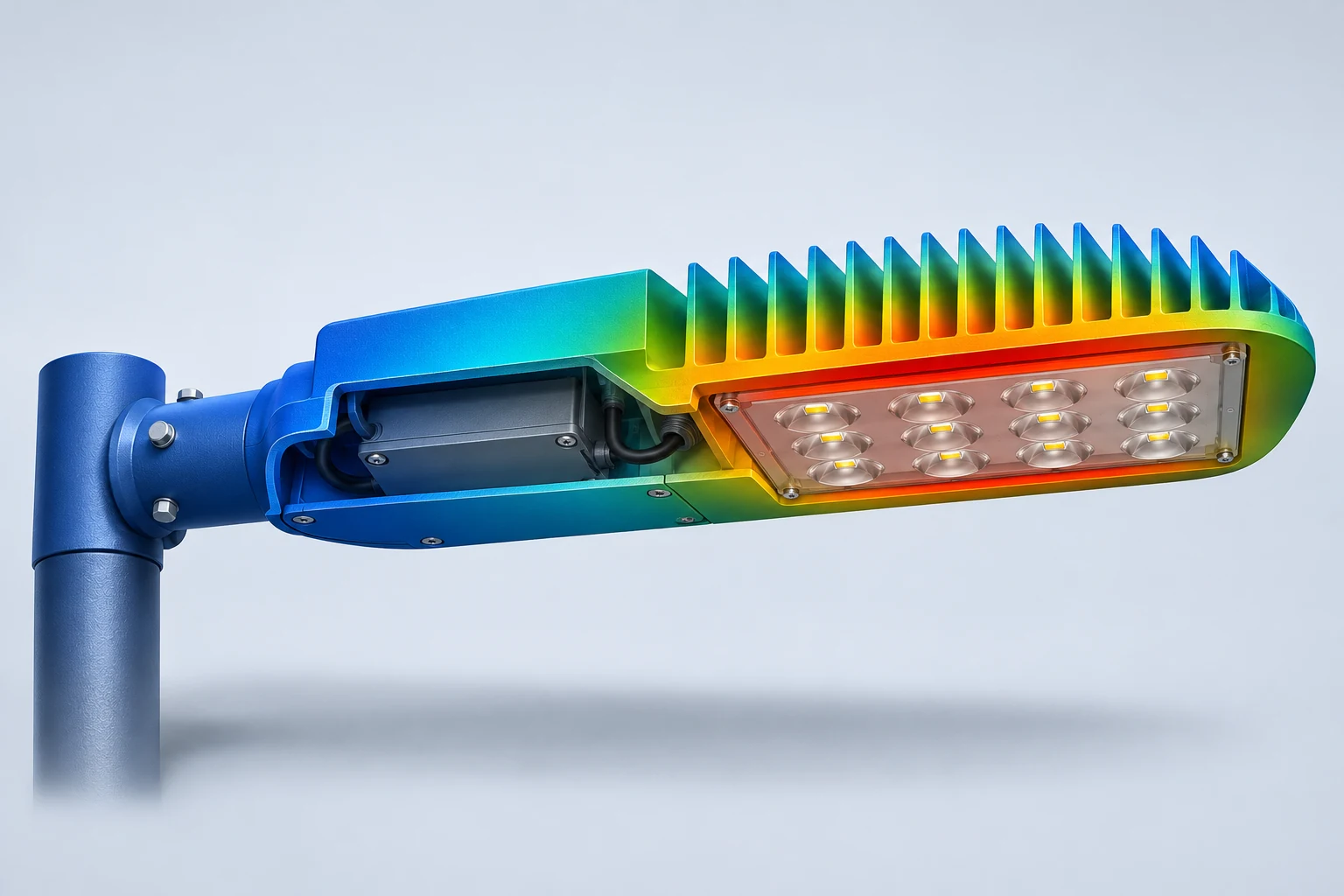
Understand temperature distribution, heat paths and temperature-related structural effects. Assess hot spots and compare cooling approaches under defined operating conditions.
Discuss a thermal analysis project ↗Your engineering decision
What do you need to understand?
01Where will hot spots develop?
02How quickly does temperature rise?
03Could expansion distort the assembly?
Thermal engineering studies
Follow the heat through the system.
Analysis capabilities
Find the right analysis for your question.
Explore the capabilities below. Select an analysis to read more; we will agree the appropriate scope around your requirements.
Temperature & heat paths
Steady-State Thermal Analysis
Assess temperature distribution and heat flow once the modelled system reaches steady operating conditions.
Transient Thermal Analysis
Understand temperature changes during start-up, varying heat loads, operating cycles and changes in the environment.
Thermal Radiation Analysis
Evaluate radiative heat exchange between surfaces, considering emissivity, surrounding temperatures and the radiative environment.
Thermal Contact Analysis
Assess heat transfer across mating surfaces, accounting for contact resistance and interface conditions.
Heat Transfer Analysis
Investigate conduction, convection and radiation to understand heat paths and identify opportunities for improvement.
Electronics, batteries & cooling
Electronics Thermal Management
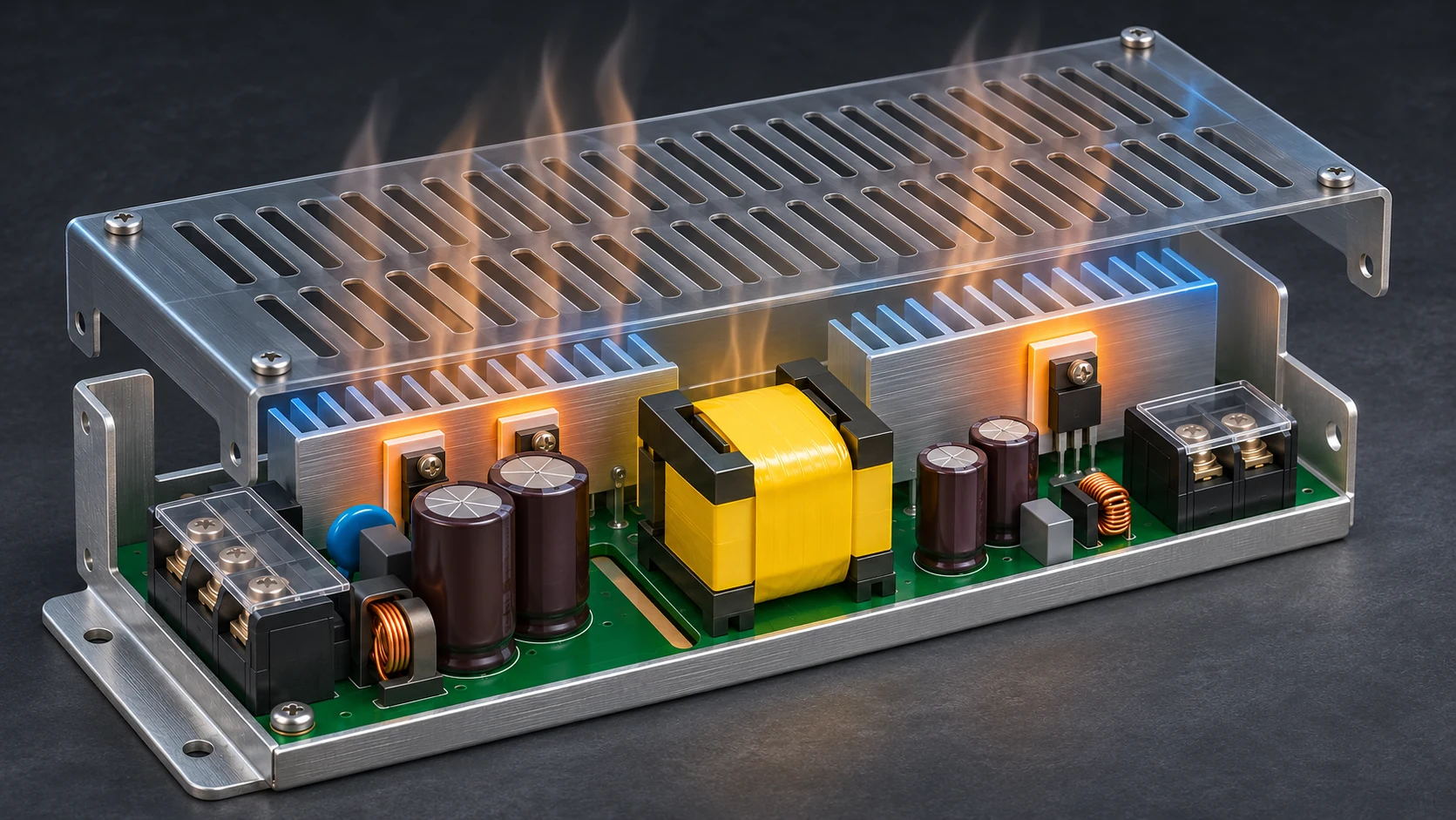
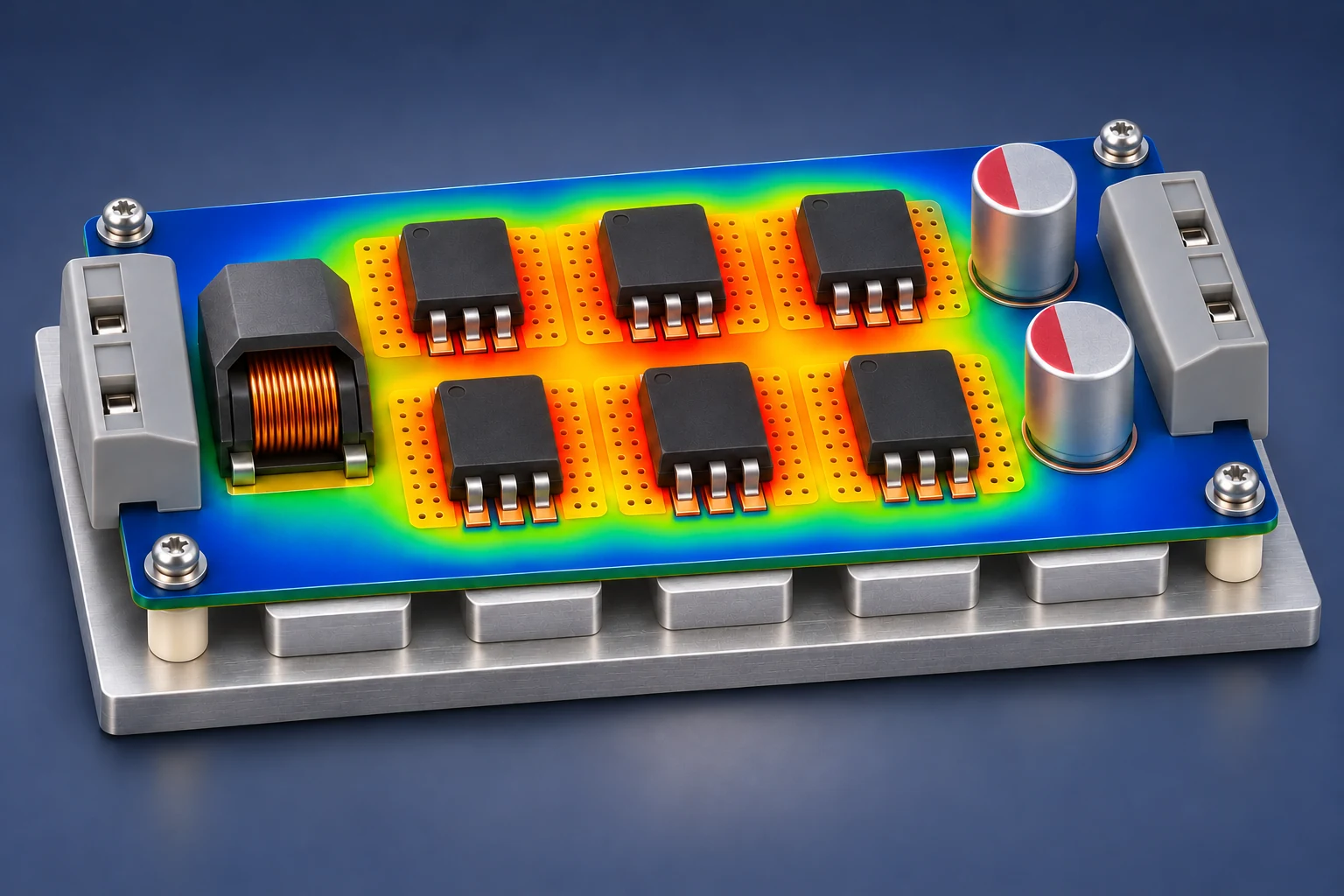
Evaluate heat generation, hot spots and temperature distribution in components, circuit boards and enclosures.
Battery Thermal Management
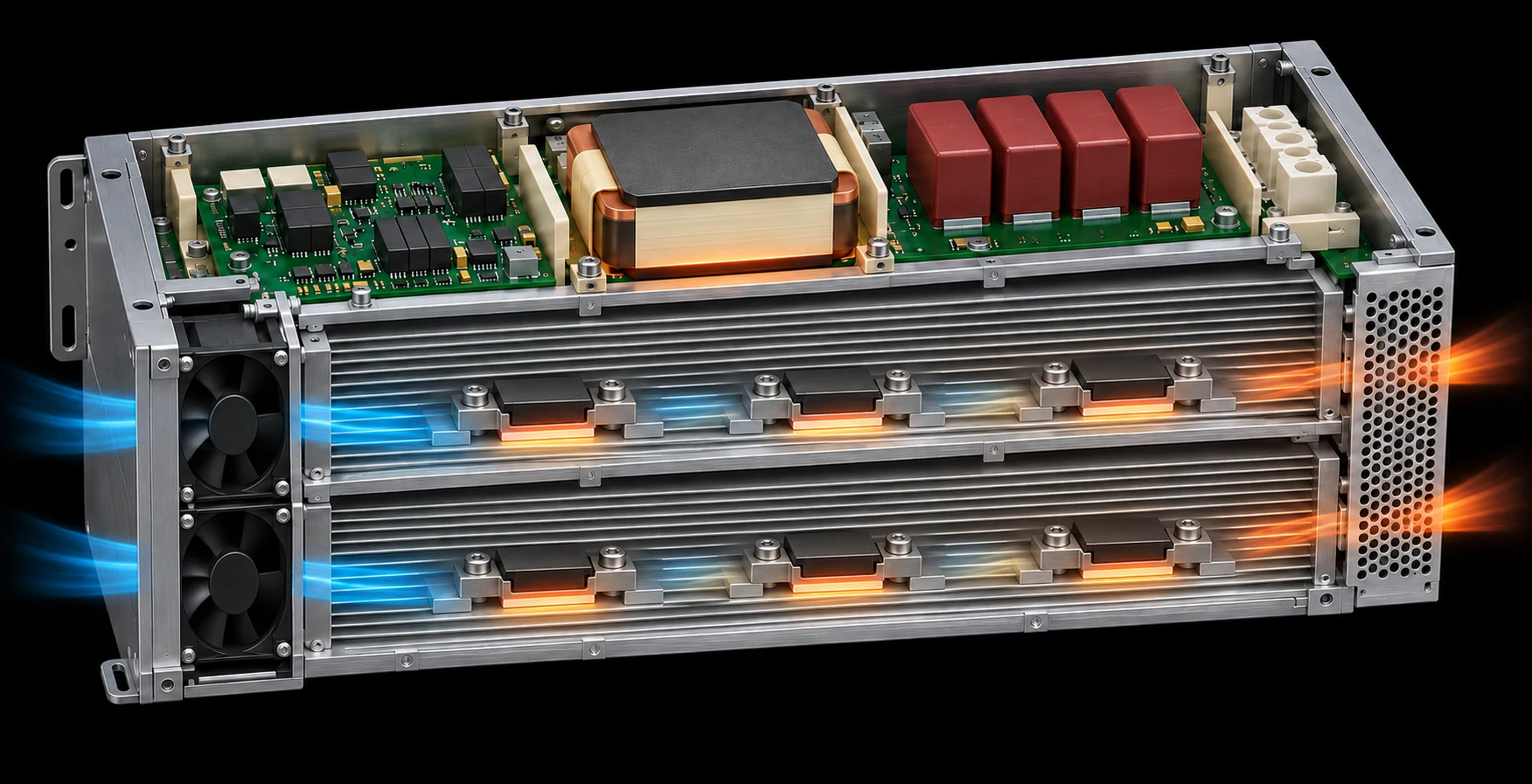
Assess temperature distribution and heat generation in cells, modules or packs to inform thermal uniformity and cooling decisions.
Cooling & Heat Dissipation Analysis
Compare heat-removal arrangements, airflow and cooling strategies for components and systems.
Thermal stress & coupled analysis
Thermal Stress & Deformation Analysis
Assess expansion, distortion and stresses associated with temperature differences and the defined structural constraints.
Thermal–Structural Coupled Analysis
Evaluate combined temperature and mechanical loading, including temperature-dependent material response where relevant.
Conjugate Heat Transfer (CHT)
Model heat conduction in solids together with fluid flow to assess temperature distribution and cooling performance.
Multiphase Heat Transfer
Investigate heat transfer involving multiple phases and phase-change processes such as boiling, condensation and evaporation.
Liquid-cooling study
Connect the heat source to the cooling path.
Server liquid cold plate
Temperature
What we need
- Geometry, materials and thermal interfaces
- Heat sources, power levels and duty cycles
- Ambient conditions, cooling arrangements and temperature limits
What you receive
- Agreed thermal analysis report and result plots
- Temperature, heat-flow or thermal-stress findings as scoped
- Assumptions, limitations and cooling recommendations
Inputs and deliverables are agreed for each project. Results are interpreted against the assessed conditions, assumptions and available data.
Have a thermal design challenge?
Tell us about your product and the decision you need to make.